
Harford Criminal Court Records
A Harford County criminal court record is the court case file, not the arrest file by itself. The record starts when a charging document, indictment, information, citation, or statement of charges is filed with the court. From that point, the docket can track arraignment, counsel appearances, bond-related events, motions, hearings, plea, trial, disposition, sentence, probation, restitution, and appeal entries. Case Search may show a charge and disposition, but it will not always show every document in the official file.
The court level matters. The Circuit Court for Harford County handles serious criminal cases, jury trials, felony-level matters, and appeals from District Court. The District Court of Maryland for Harford County handles misdemeanors, certain felonies, traffic-related criminal matters, and other lower trial court proceedings, but it does not conduct jury trials. Prosecuted criminal filings may involve the Harford County State's Attorney, while defense representation may involve private counsel or the Maryland Office of the Public Defender District III.
For the arrest-to-charge pathway and the charging document itself, use Harford County arrest records and court charges. For the broader public case search framework, use Harford County court records. Criminal court records focus on the court case and outcome.
Search Harford Criminal Cases
Maryland Judiciary Case Search and Record Portal is the first public search channel for Harford County criminal case summaries. Search by case number when known, or use the defendant's name and narrow by court and case type where the portal allows. Maryland Judiciary's access guidance makes a key distinction: Case Search is a public summary, while the complete file is maintained by the clerk where the case was heard.
- Determine whether the case is likely in Circuit Court or District Court based on charge level, jury demand, appeal posture, or court notice.
- Accept the Case Search terms and enter the case number or defendant name.
- Review the court location, case status, charge list, event dates, and disposition before assuming it is the correct person or case.
- Open the docket entries to follow arraignment, motions, hearings, plea, trial, sentencing, or warrant activity.
- Ask the proper clerk for complete documents or certified copies if the online result is not enough.
Police reports, incident files, and investigatory materials are not the same as criminal court records. Harford County Sheriff's Office agency records route through its public-records process, and investigatory records may be limited under Maryland law. A jail custody lookup is also separate from the court case file.
Harford Criminal Case Flow
Criminal court records become clearer when the entries are read in sequence. A charge can start in District Court, move to Circuit Court, resolve by plea, proceed to trial, or generate post-judgment entries. Some cases have warrants, bond activity, probation, restitution, or appeals. A docket may also show nolle prosequi, stet, probation before judgment, guilty, not guilty, dismissal, or other Maryland-specific outcomes.
Case flow: Charges Filed › Arraignment › Pretrial / Motions › Plea or Trial › Disposition › Sentencing
| Stage | What Happens |
|---|---|
| Charges Filed | A citation, statement of charges, indictment, information, or other charging document enters court. |
| Arraignment | The charge is presented and a plea may be entered or scheduled. |
| Pretrial / Motions | Attorneys file requests, hearings are set, evidence issues may be addressed, and continuances may appear. |
| Plea or Trial | The defendant may plead, proceed to bench or jury trial, or resolve some charges while others are dismissed. |
| Disposition | The court records the outcome for each charge or the whole case. |
| Sentencing | The court may impose incarceration, probation, restitution, fines, costs, or other conditions. |
Harford Criminal Record Fields
Maryland Judiciary materials identify public fields such as party names, city and state, case number, date of birth where available, trial date, charge, and case disposition. Criminal case files can include more than the public summary, including charging documents, bail or bond information, docket entries, trial dates, pleas, verdicts, sentencing, probation terms, restitution, warrants, and commitment or release orders. Some fields are redacted, sealed, or withheld from public view.
| Field | What It Shows |
|---|---|
| Case Number | The identifier needed for exact portal searches and clerk requests. |
| Defendant | The person charged in the criminal case; public identity fields may be limited. |
| Court | Whether the case is in Harford Circuit Court, District Court, or an appellate path. |
| Charges | The filed offenses, citation, statement of charges, indictment, or information entries. |
| Plea | The defendant's formal response, such as guilty or not guilty. |
| Docket Entries | Hearings, motions, continuances, warrants, orders, trial settings, and other case activity. |
| Disposition | The outcome for the charge or case, including guilty, not guilty, dismissed, nolle prosequi, stet, or PBJ where applicable. |
| Sentence | Incarceration, probation, fines, restitution, conditions, or release orders after conviction or qualifying disposition. |
State's Attorney Criminal Filings
Maryland uses the title State's Attorney, not District Attorney. The Harford County State's Attorney prosecutes criminal cases in Circuit Court and District Court, works with law enforcement on charging and indictment, and appears in court records through charging decisions, plea positions, sentencing recommendations, and victim-related court processes. Albert Peisinger is identified in the research as Harford County State's Attorney.
The State's Attorney's role does not make that office the custodian for every police record. Sheriff reports, agency records checks, crash reports, and investigatory records usually start with the law-enforcement custodian. Public Defender files are also not public criminal court records; they are defense files and may contain attorney-client material.
The image below comes from the Maryland Public Information Act definitions statute, which helps distinguish custodians and public records outside the court-file rules.
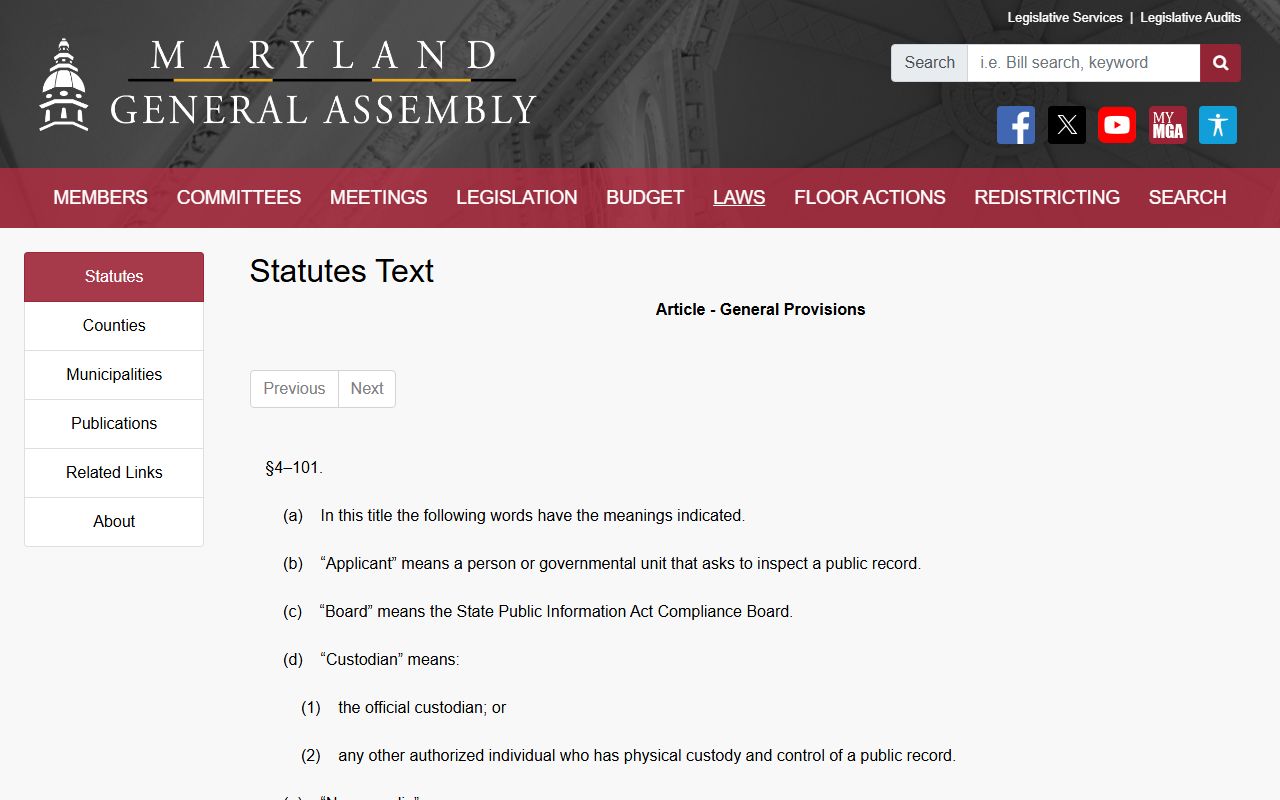
That distinction keeps criminal court records separate from agency records even when the same incident led to both.
Charges vs Convictions
A charge is an accusation filed in court. A conviction is a finding or adjudication of guilt that may carry sentence and consequences. Harford County criminal court records can show charges that were amended, reduced, dismissed, placed on stet, ended in nolle prosequi, or resulted in acquittal. Reading only the charge line without the disposition can give the wrong result.
| Charge | Conviction | |
|---|---|---|
| Meaning | An accusation or filed offense. | A guilty finding, guilty plea, or qualifying adjudication. |
| Where It Appears | Charging document and docket entries. | Disposition, judgment, and sentencing entries. |
| Can Change | May be amended, reduced, dropped, or dismissed. | May be appealed, expunged if eligible, or followed by sentence and probation. |
| How to Read | Check each charge separately. | Match the conviction to the exact count and sentence. |
Sealed vs Expunged Records
Restricted records are a major issue in Harford County criminal court records. Juvenile records are confidential under Courts and Judicial Proceedings section 3-8A-27. Maryland Criminal Procedure section 10-105 covers eligible non-conviction and specified dispositions, while section 10-110 provides a path for some eligible convictions. Sealing or shielding restricts view. Expungement removes eligible police and court records from public access under the statutory process.
| Sealed or Shielded | Expunged | |
|---|---|---|
| Public View | Hidden or restricted from ordinary public access. | Removed from public access when the order is carried out. |
| Record Existence | The record may remain available to authorized users. | Covered police and court records are treated under the expungement order. |
| Common Basis | Confidentiality, court order, juvenile status, or protected information. | Eligibility under Criminal Procedure section 10-105 or 10-110. |
| Practical Step | Ask the court about access or party status. | File the correct petition in the court that handled the case. |
The image below comes from Maryland's expungement statute for eligible non-conviction and specified dispositions.
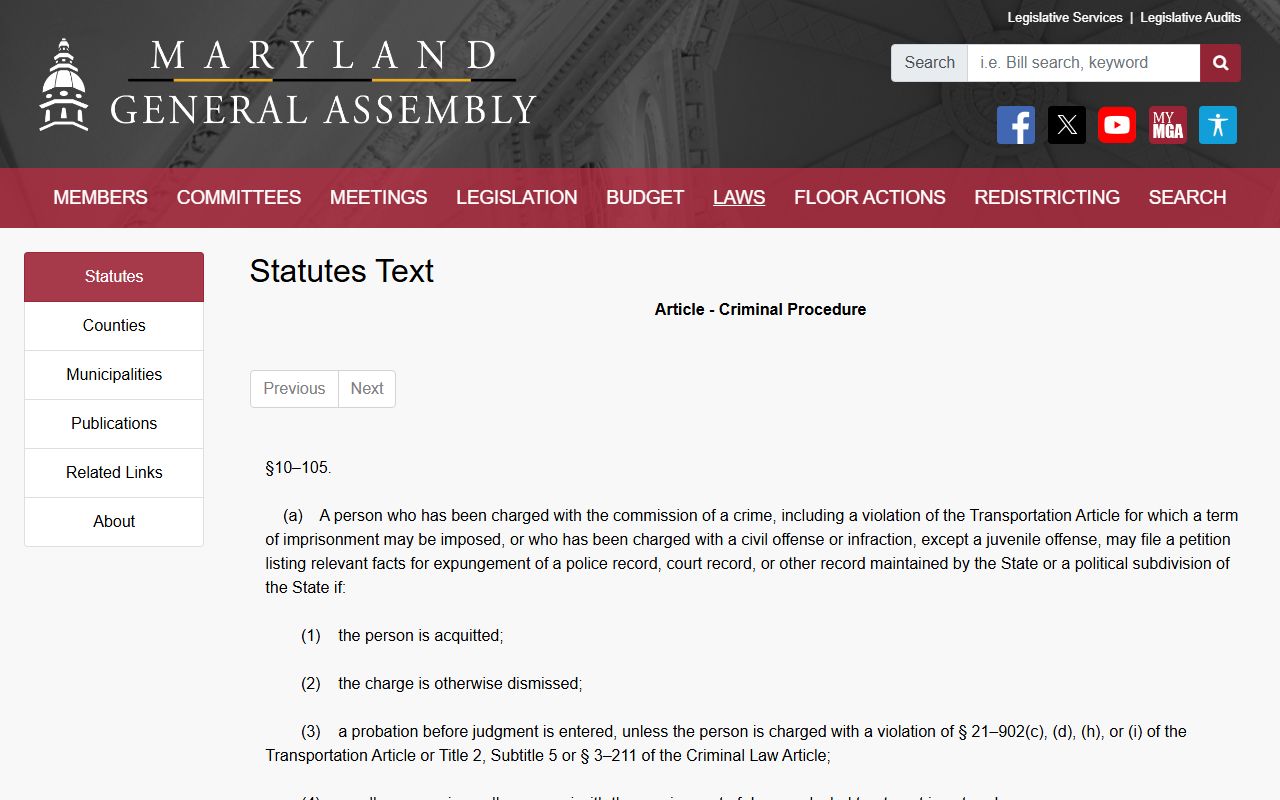
Non-conviction outcomes still require the correct eligibility review and court process before a public result disappears.
The next image comes from Criminal Procedure section 10-110, the Maryland statute for some eligible convictions.
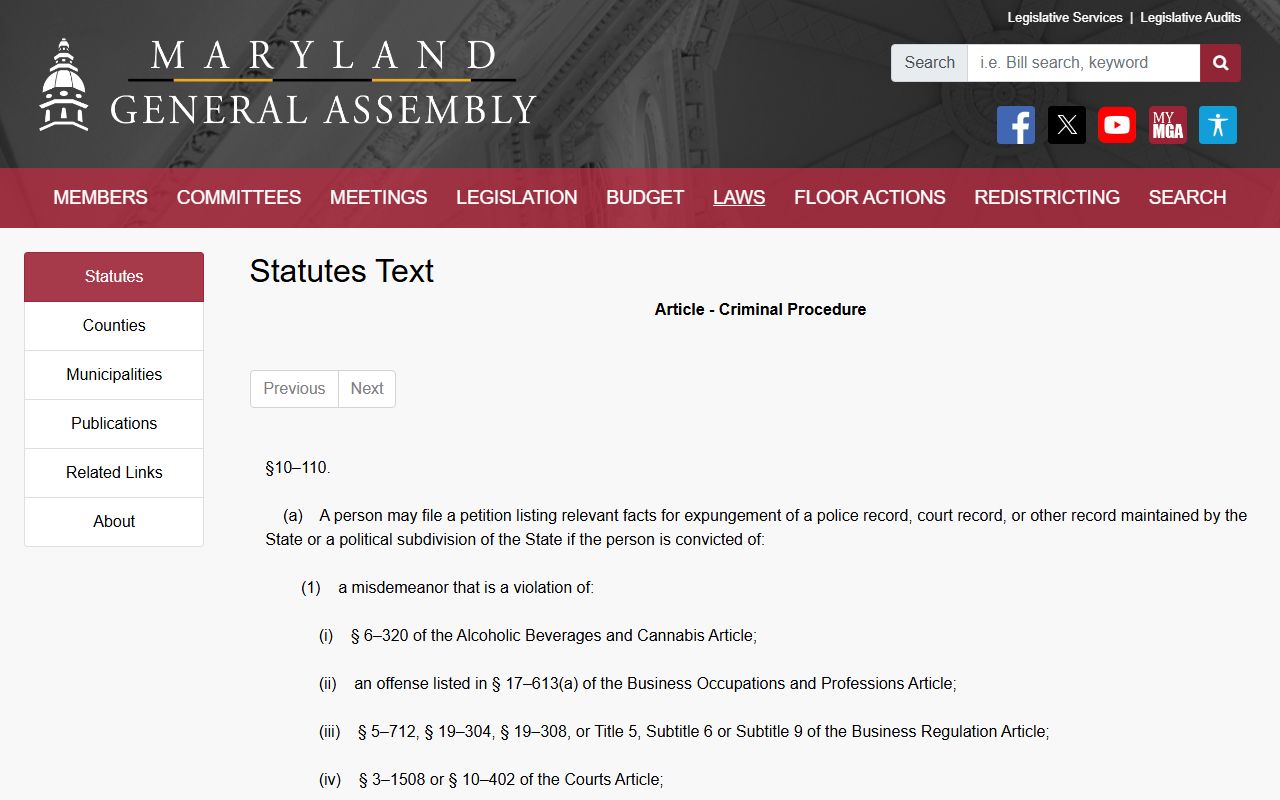
Conviction expungement is narrower than a simple records search and should be checked against the exact disposition and statute.
Investigatory Records Limits
Criminal court records and investigatory records often overlap in the facts they describe, but they are controlled by different custodians and rules. A court docket may show that a search warrant, charging document, or motion exists, while a sheriff file may contain reports, witness statements, or investigative material. General Provisions section 4-351 allows denial or limitation of law-enforcement and prosecution investigatory records in specified circumstances.
The image below comes from that Maryland investigatory-record statute.
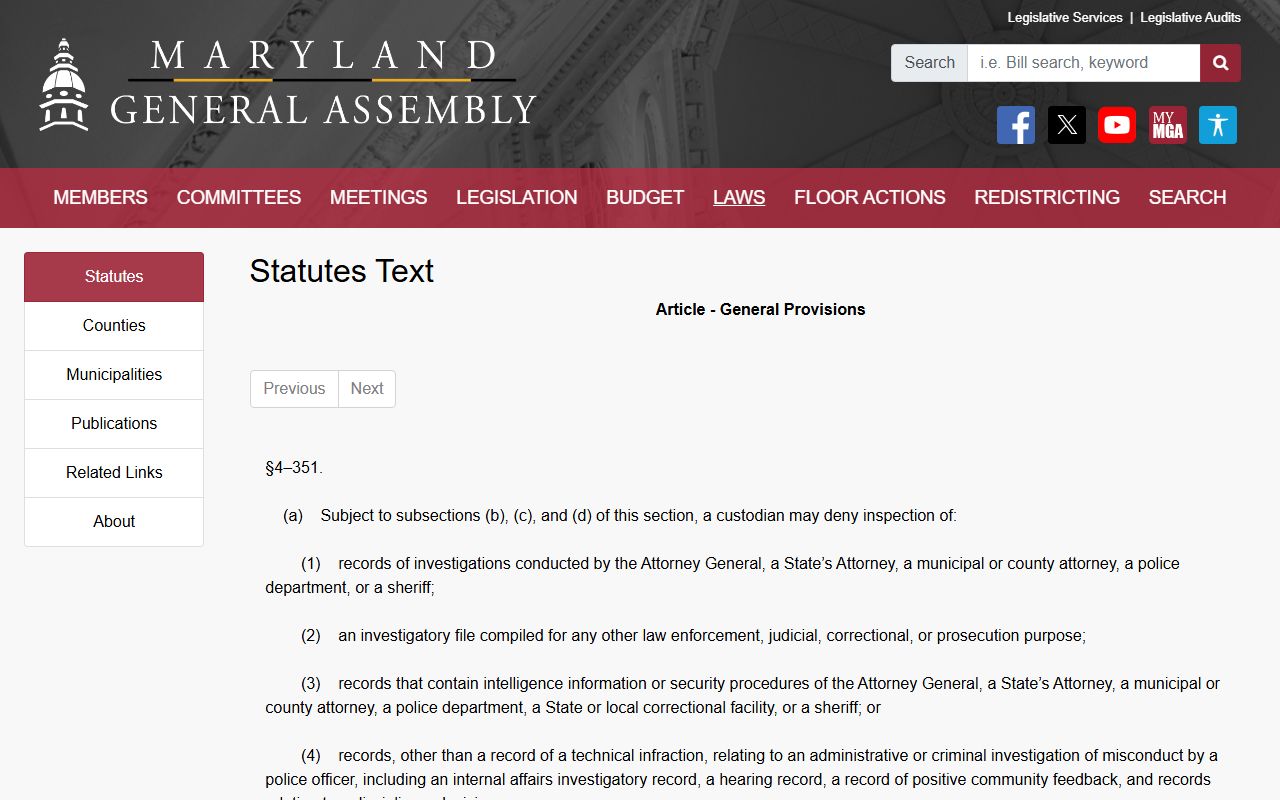
That statute explains why an agency may withhold or redact material even when a related court docket is public.
Harford Juvenile Criminal Limits
Juvenile records should not be treated as ordinary public criminal court records. Maryland law keeps police and court records concerning a child confidential and separate from adult records except as authorized. Harford County Teen Court also exists as a diversion track for some youth ages 13 to 17, where successful completion can avoid juvenile-record consequences.
The image below comes from Maryland's juvenile confidentiality statute.
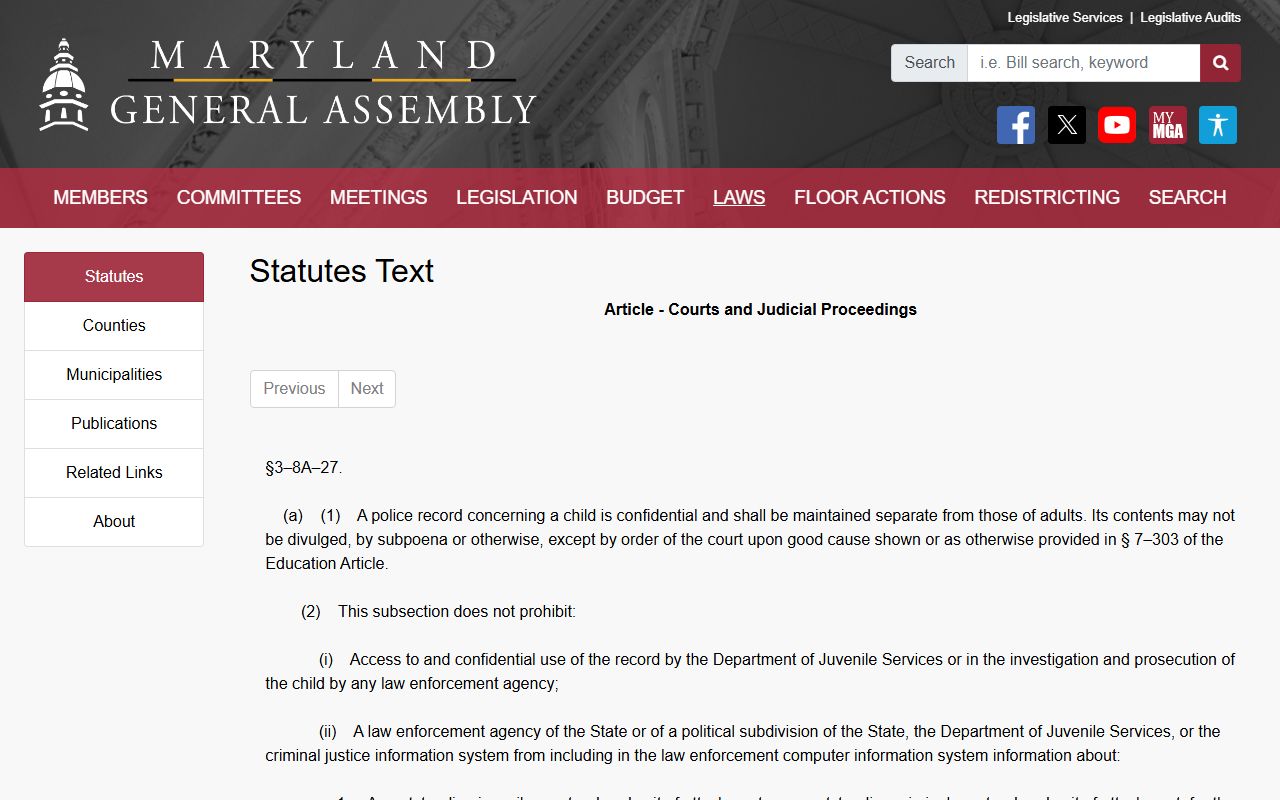
Public search instructions should not direct readers to look for juvenile names in ordinary adult criminal case results.
Federal Criminal Records
Some criminal cases involving Harford County residents or events may be federal rather than state cases. Federal crimes are prosecuted by the U.S. Attorney's Office for the District of Maryland and filed in the U.S. District Court for the District of Maryland. Those records are not in Maryland Case Search. They use PACER and federal court systems.
The image below comes from the U.S. Attorney's Office for the District of Maryland, the federal prosecution office identified in the research.
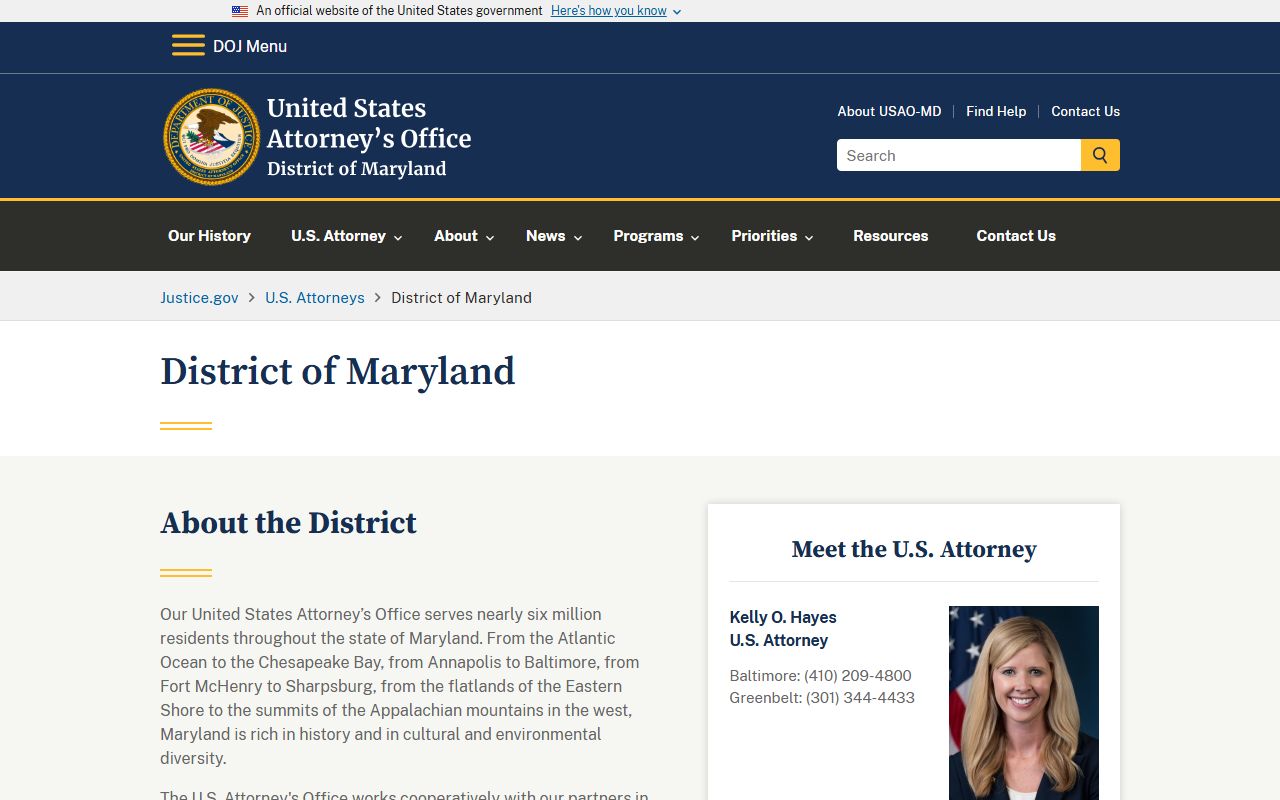
Federal prosecution records should be verified through federal court and federal agency sources rather than Harford County clerk counters.
Public Access to Harford Criminal Records
Maryland court-record access is governed by Maryland Rules 16-901 through 16-914 and the judiciary's record systems. The Public Information Act helps with many agency records, but it does not override court access rules for case files. Harford County criminal court records may be public, partly public, redacted, sealed, expunged, or available only through a clerk request, depending on the case and document.
Key access point: Use Case Search for a public summary, then ask the proper Harford court clerk for complete criminal case-file access.